Daylight Saving Time Definition for Sunrise and Sunset Times
A daylight saving time definition for sunrise and sunset readers: understand the one-hour clock shift and why it does not add daylight.
- Daylight Saving Time
- Daylight Length
On this page
The daylight saving time definition is straightforward: daylight saving time (DST) is an adjustment to the local civil clocks, effectively moving them ahead by one hour relative to standard time. This shift means that when DST is in effect, people wake up and go to bed at a slightly different time than they would if we followed true solar events like sunrise and sunset. When DST ends, it's as if we've returned to standard time: the reverse adjustment of one hour.
This adjustment may sound complicated, but there's a very simple way to think about it. It changes the labels used for sunrise and sunset — not the actual solar event times themselves. Imagine you're going out on a Saturday night to catch a movie or dinner. If the sun rises and sets at roughly the same time every day, then why do these two events change labels?
Because daylight saving time simply adjusts the clock, changing how long your day feels, even though the amount of sunlight remains the same. You'll notice this during transitions when daylight saving time starts and ends.
If you look at the U.S. transition rules for DST, they’re quite clear: The second Sunday in March is when daylight saving time begins, with the clocks moved ahead from 2:00 a.m. local standard time to 3:00 a.m. local Daylight Saving Time, meaning one hour of clock labels will be skipped. Then, the first Sunday in November marks the end of DST, with the clocks moved back from 2:00 a.m. local Daylight Saving Time to 1:00 a.m. local standard time, resulting in one hour of clock labels being repeated.
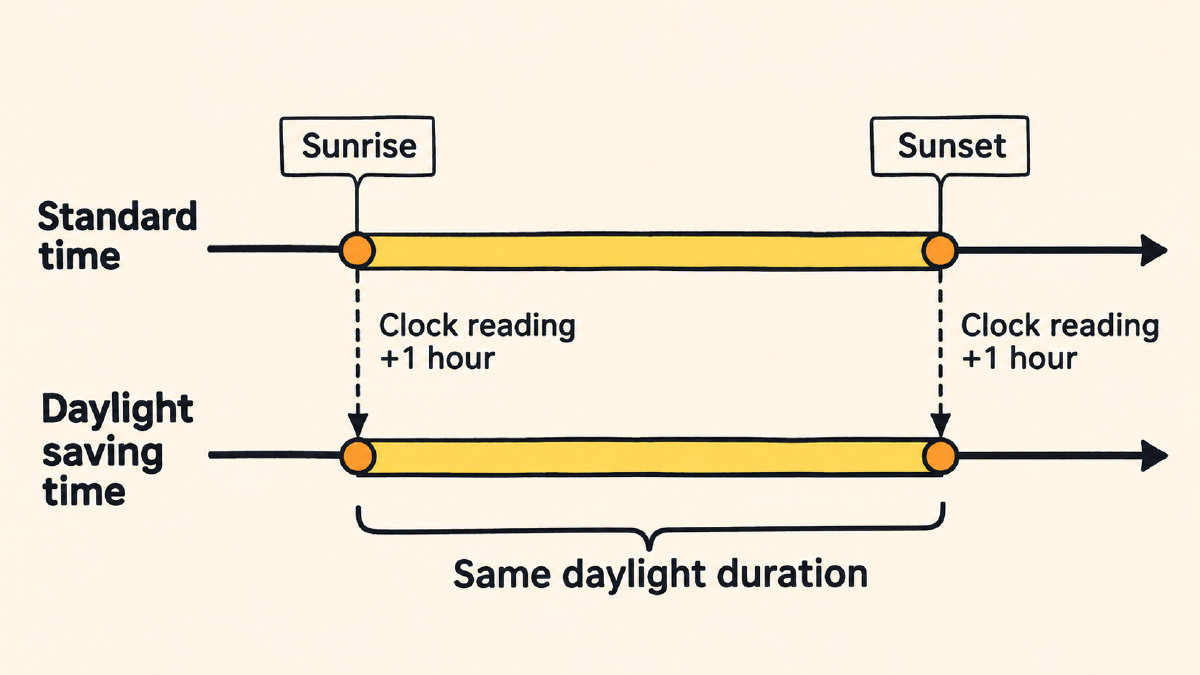
Comparing Clock Readings and Daylight Duration
If you need help comparing calendar dates across this kind of transition, separating event clock readings from daylight duration should make things much easier to understand. In fact, our date selection and monthly views allow us to place an apparent jump into context, using supported city calendars like San Diego, San Francisco, New York, Chicago, Las Vegas, and Portland.
Chicago’s sunrise and sunset are marked as local times, while the city’s date selection lets you see the daylight length for your chosen date. You can also choose to view a full-month calendar, which helps contextualize what might otherwise seem to be a big jump.
It’s worth noting that the sunrise and sunset labels represent local clock readings, not the actual elapsed duration of daylight. While you’ll see some jumps between consecutive dates, they’re related to the label change caused by daylight saving time, rather than the actual amount of daylight available.
Sources
Check sunrise and sunset times
Choose a city and date for local times and a monthly calendar.
More in Sunrise & Sunset Guides
- What Is Dusk? How It Differs from Sunset and TwilightWhat is dusk? Learn how everyday dusk differs from sunset and how civil, nautical and astronomical dusk mark the ends of evening twilight phases.
- Longest Day This Year: What June 21, 2026 Means for Your CityThe longest day this year was June 21, 2026. Learn why daylight varies by city and why the latest sunset can fall later.
- Is EDT Standard Time? Reading New York’s Sun CalendarIs EDT standard time? Learn how EDT and EST differ and how to read the date-specific offsets in New York’s sunrise and sunset calendar.