Do We Gain or Lose an Hour on November 1, 2026?
Do we gain or lose an hour on November 1, 2026? Gain one: clocks fall back at 2 a.m. local time, shifting sunrise and sunset clock readings.
- Daylight Saving Time
On this page
The answer to “do we gain or lose an hour” is that the transition into the end of daylight saving time will result in an additional hour on November 1, 2026. The U.S. will gain one hour due to the change as the clock will be moved back one hour (from 2 a.m. to 1 a.m.) on the first Sunday in November.
Across all six cities that will experience this transition (San Diego, San Francisco, New York, Chicago, Las Vegas, and Portland, Oregon), you’ll see the local transition at 2 a.m. local time. All six cities observe the U.S. seasonal change, so they’re not in a daylight saving time exemption region. This is the same across each city’s own calendar; however, there are differences when compared to the other cities.
An Hour Less in March
In March, when we add an hour, the reverse is true: we skip an hour from 2 a.m. to 3 a.m. on the second Sunday in March. When that happens, it removes one hour from the local calendar day rather than adding one. In effect, you have an hour less during the day the clocks change.
Changing the clock readings has nothing to do with how long we actually get sunlight — only with the alignment between our clock’s ticking and the length of daylight. If you were to compare the two dates on your relevant city’s calendar, you would find that the approximate seasonal clock shift will cause the sunrise and sunset readings to shift by about an hour. In March, sunrise and sunset read about an hour later by the clock, even though the Sun’s schedule hasn’t changed.
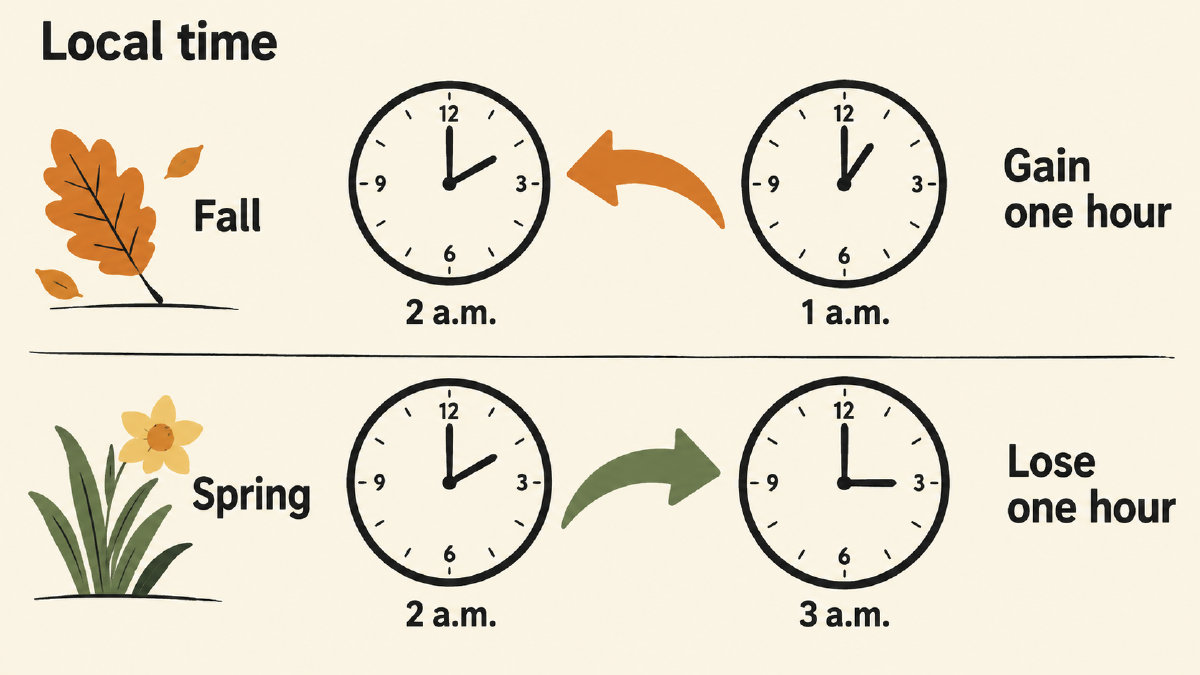
Instead of inferring that the added hour corresponds to more daylight, look instead for the repeated hour.
In San Diego, you’ll see sunrise about an hour earlier by the clock on November 1 than on October 31. The sun also sets about an hour earlier by the clock on November 1 than on October 31. So, the difference isn’t that we’ve gained an extra hour of sunlight. Instead, it’s simply that we’ve shifted the clock back an hour, causing the displayed sunrise and sunset times to differ.
Sources
Check sunrise and sunset times
Choose a city and date for local times and a monthly calendar.
More in Sunrise & Sunset Guides
- Pacific Time to Eastern Standard Time for Sunrise and SunsetConvert Pacific Time to Eastern Standard Time for sunrise and sunset: when to add two or three hours, and how New York time differs.
- Las Vegas Time Zone: How DST Changes Sunrise and Sunset Clock TimesSee how PST, PDT and the 2026 daylight saving transitions affect the sunrise and sunset clock times shown for Las Vegas.